
Introductory documentary · 1:40

Music series
To bring the Albanian epic to a generation that has heard its name but rarely its stories. Not as a school lesson — as music that stays.
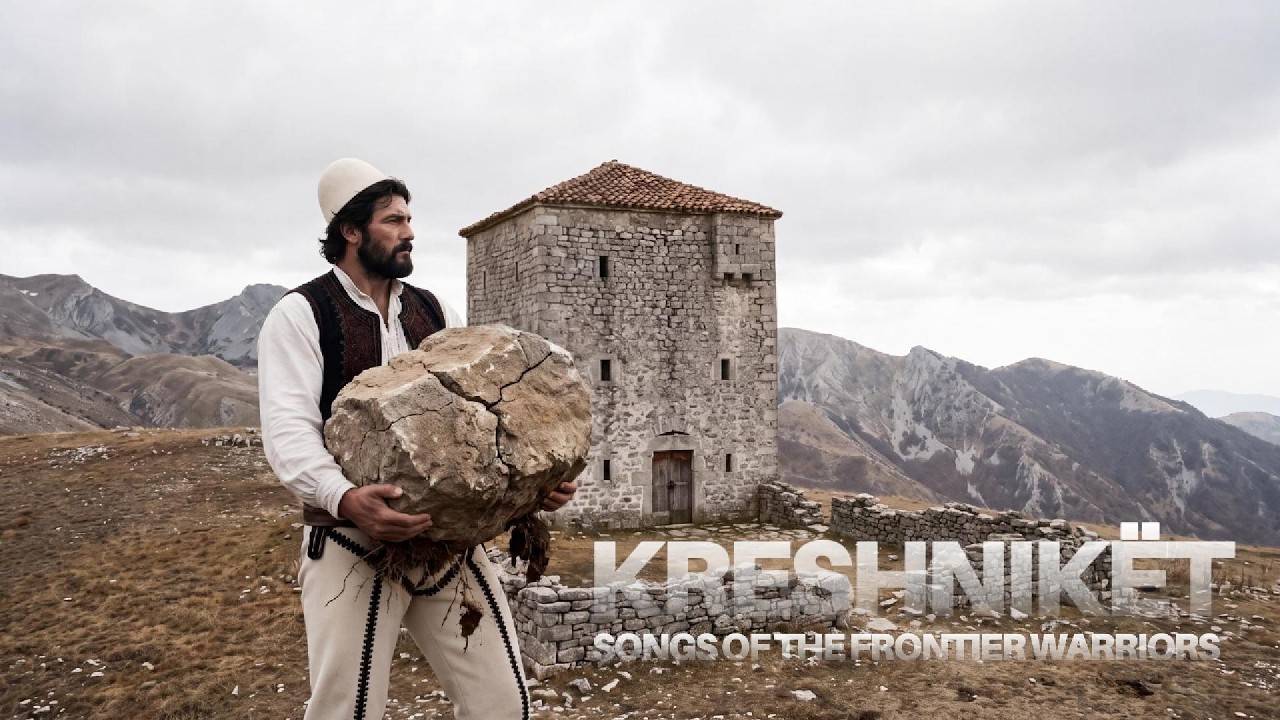
The Epic of the Frontier Warriors — Kângë Kreshnikësh in Albanian — is the central cycle of Albanian oral legend. These are stories of Muji and Halili of Jutbina, of the zana of the mountains, of the foreign kings beyond the border and of the bajloz who rises out of the sea. Theirs is the world of frontier warriors: the sworn word, honour, and the defence of land and people.
No author ever wrote these songs down. They passed from mouth to mouth through the rapsodë, folk singers who learned them by ear and rebuilt them at every performance, accompanied by the lahuta — a single-stringed instrument of wood and hide whose sound is harsh and long. In 2025, the art of playing, singing and crafting the lahuta was inscribed on UNESCO's list of intangible cultural heritage.
Systematic collection came late. In 1937, two Franciscan friars — Bernardin Palaj and Donat Kurti — published in Tirana the volume «Kângë kreshnikësh dhe legenda», the second in the series «Visaret e Kombit»: thirty-four epic songs of some eight thousand two hundred verses, gathered among the highlanders of the north. Without that fieldwork, much of this epic would not exist today.
Its mark on Albanian literature runs deep. Gjergj Fishta (1871–1940), a Franciscan as well, built his masterwork «Lahuta e Malcís» on the spirit and form of these songs — thirty cantos and some seventeen thousand verses, published in instalments between 1905 and 1937, where the zana and the orë of the folk epic return. Whoever reads Fishta hears the lahuta behind him.
This project turns those stories back into music. Every episode rests on two elements: a short documentary telling who the hero was and why he matters, and then the song itself. The series is planned in ten episodes, from the solitary hero to the full mythological world, closing with the question of what Muji, Halili and Gjergj Elez Alia still say to us today.
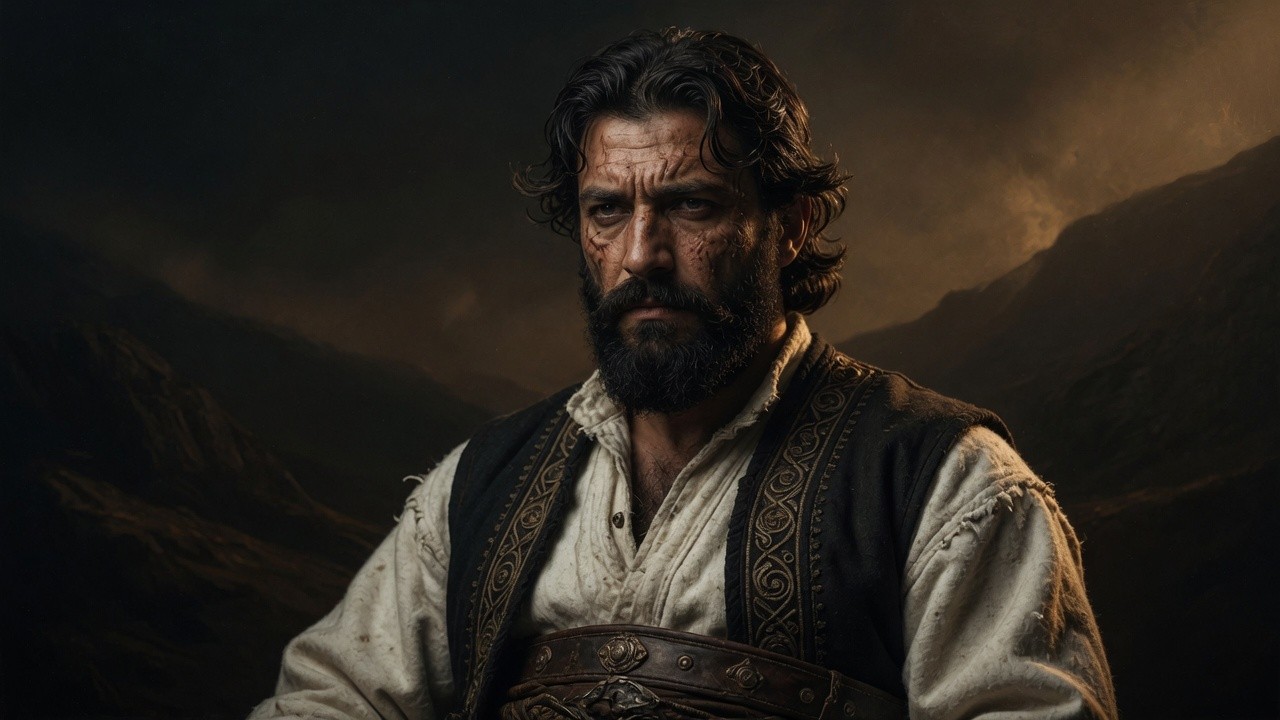
The wounded hero
Nine wounds, nine years in bed. He rises only when his sister and his land are threatened.
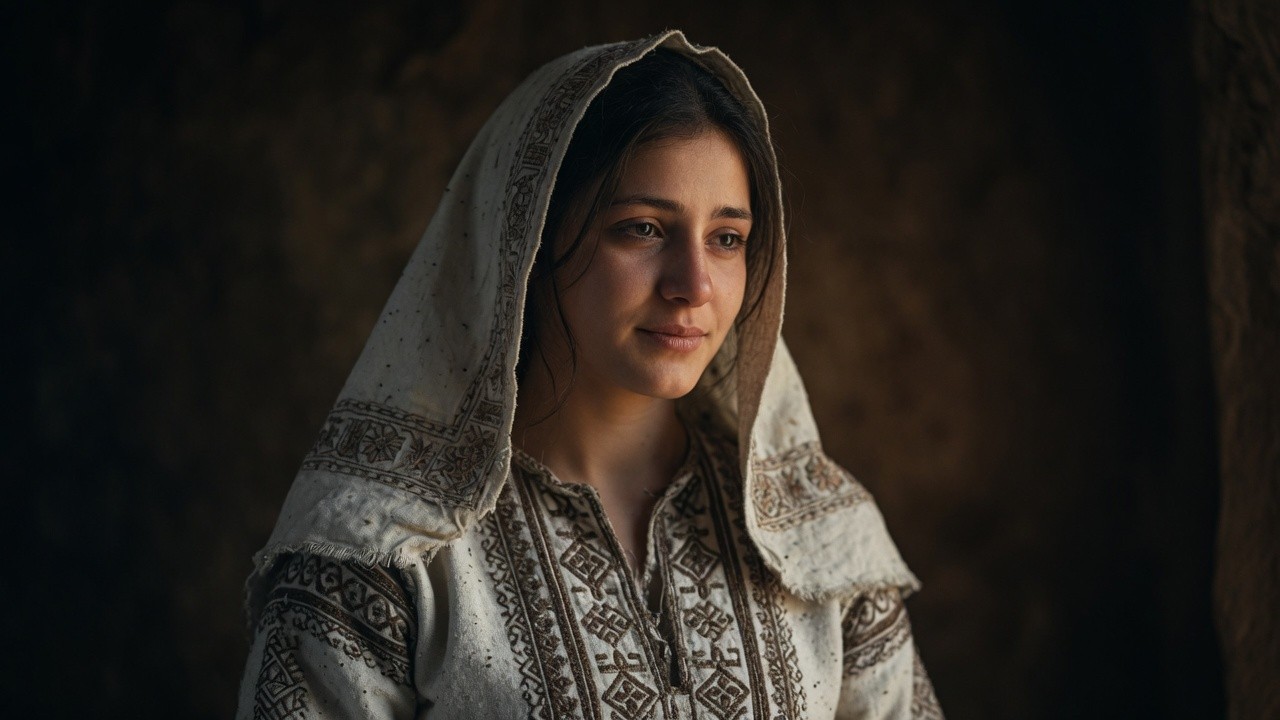
Faithfulness
For nine years she washed his wounds without complaint. She is the reason the hero rises.
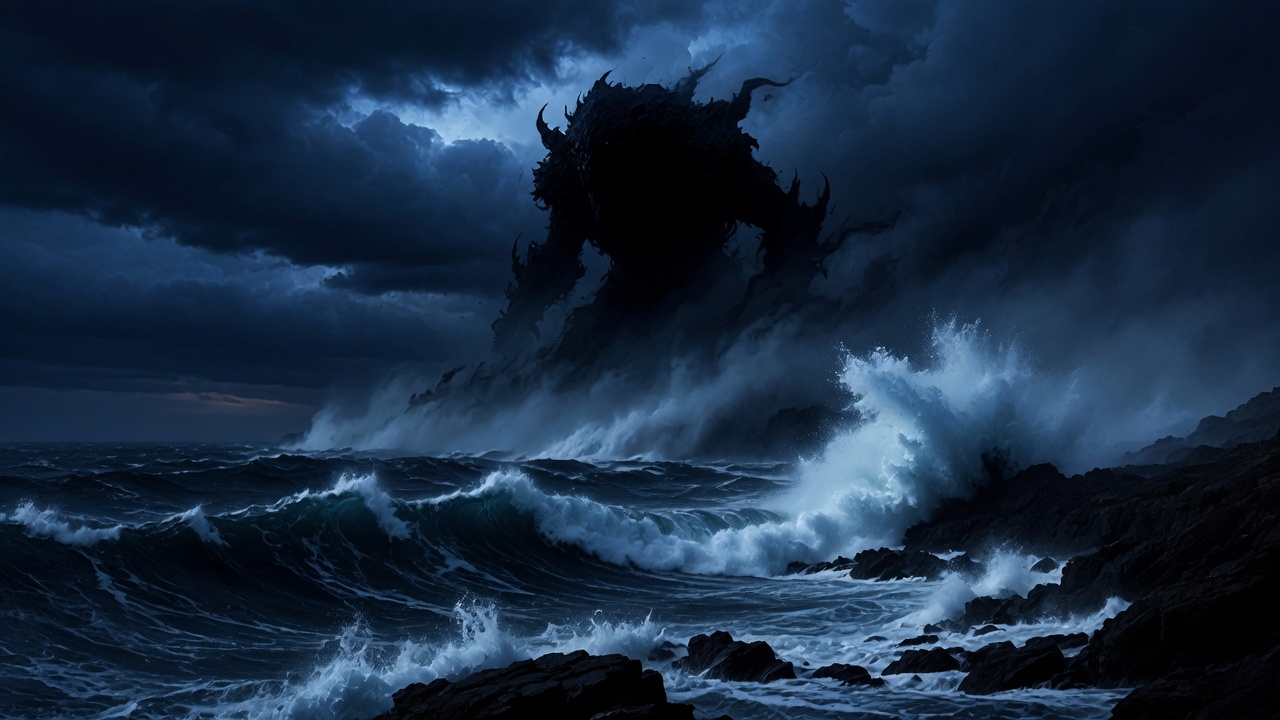
The evil that comes from the sea
The monster who demands tribute in people. Facing him is the true test of courage.
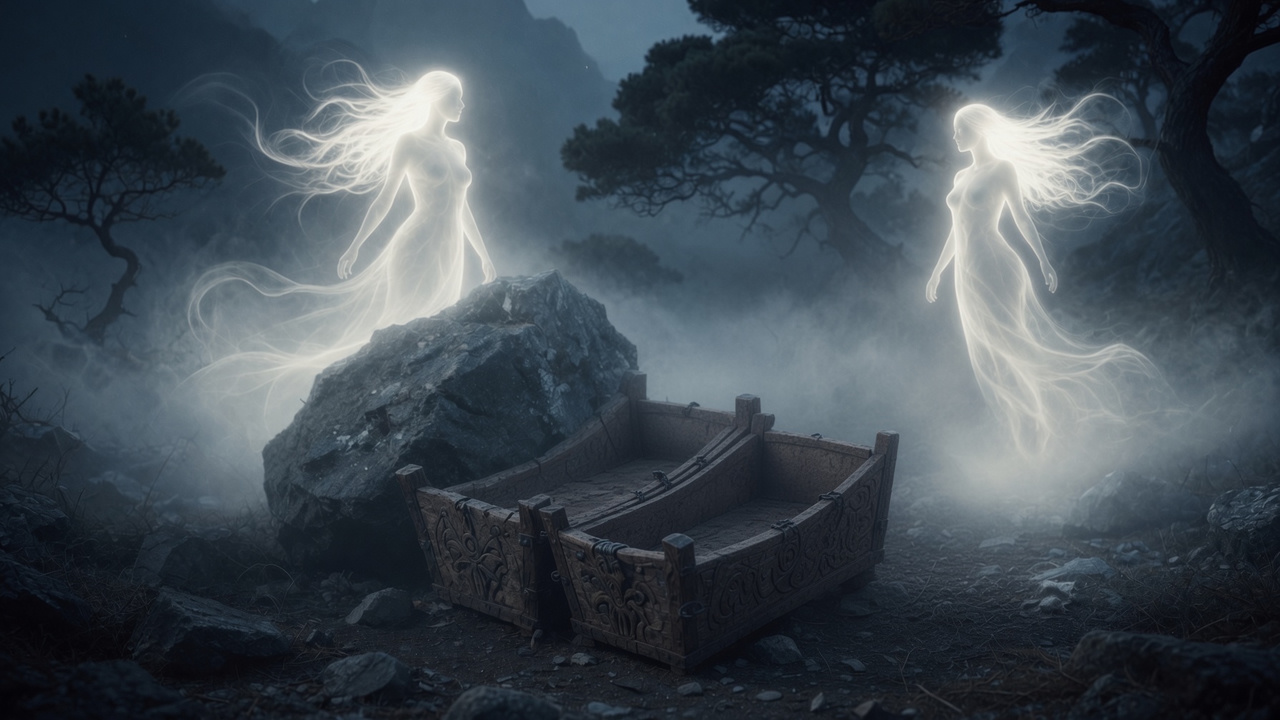
Beings of the mountains
They dwell by springs and peaks. They gave Muji his strength and remained his sworn sisters.
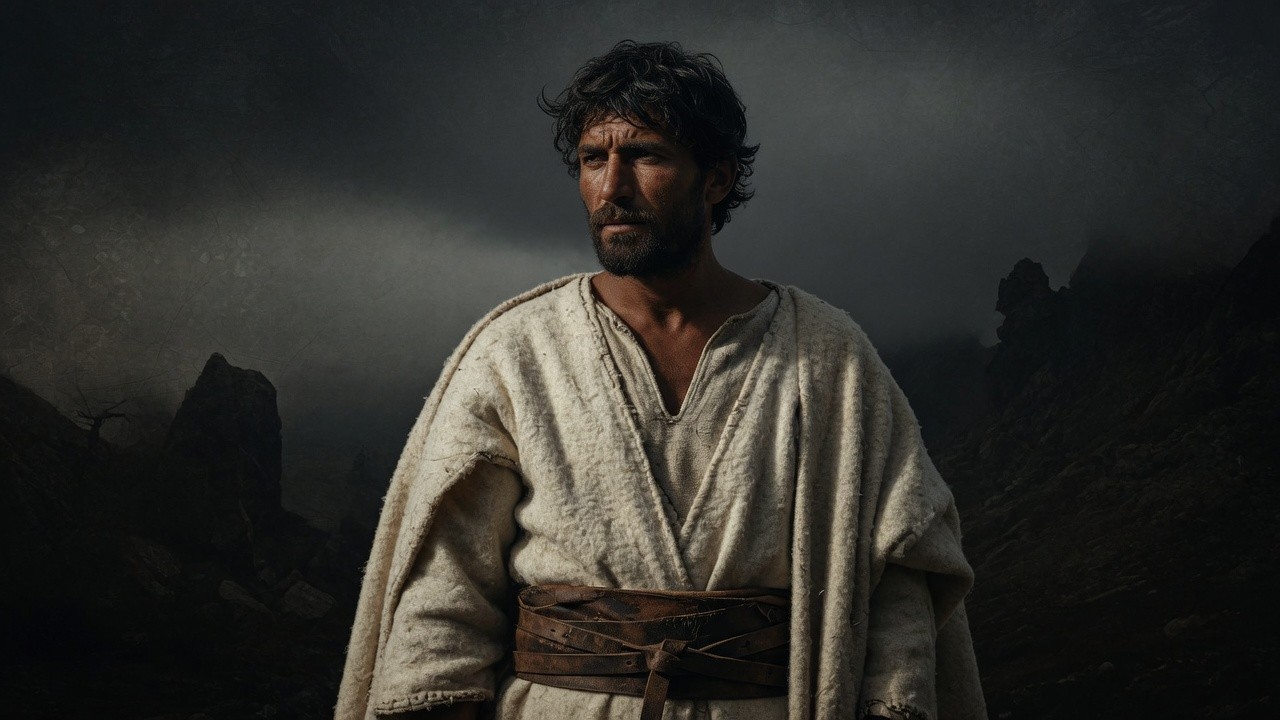
The warrior of Jutbina
The shepherd who received strength from the zana and became the central figure of the epic.
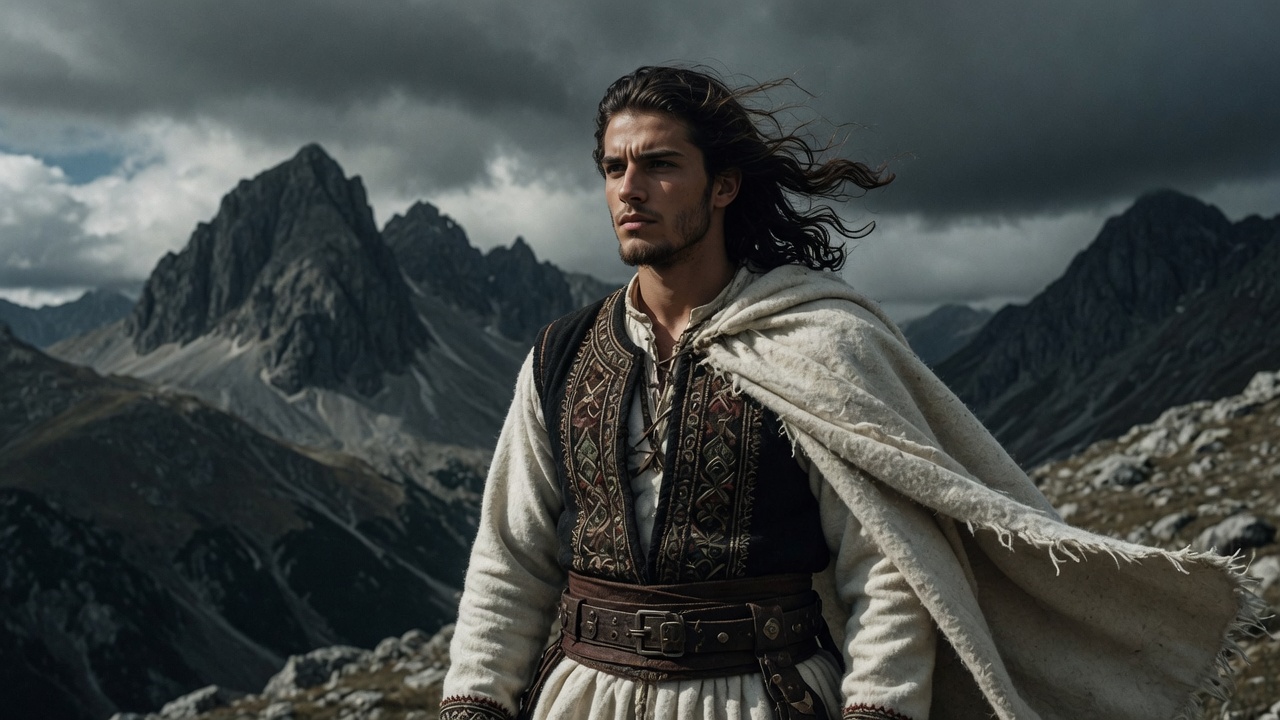
Muji's brother
The young warrior, swift and handsome, the other half of the epic's main trunk.
Episode 1
The song of Gjergj Elez Alia is among the best known of our oral legends, and it stands slightly apart: its hero is no warrior of Jutbina but a solitary man who lies nine years with nine wounds.
His sister washes those wounds every day, without complaint and without leaving him alone. When the Bajloz comes out of the sea demanding tribute — and among it his sister — Gjergj rises from the bed where everyone expected him to die. He does not go out for glory or revenge; he goes because there is no one else.
The encounter ends in his victory, but the price is heavy. That is precisely why this song is the gateway to the series: before the great deeds arrive, it shows what it means to keep your word when nothing else is left.
In this episode

Episode 2
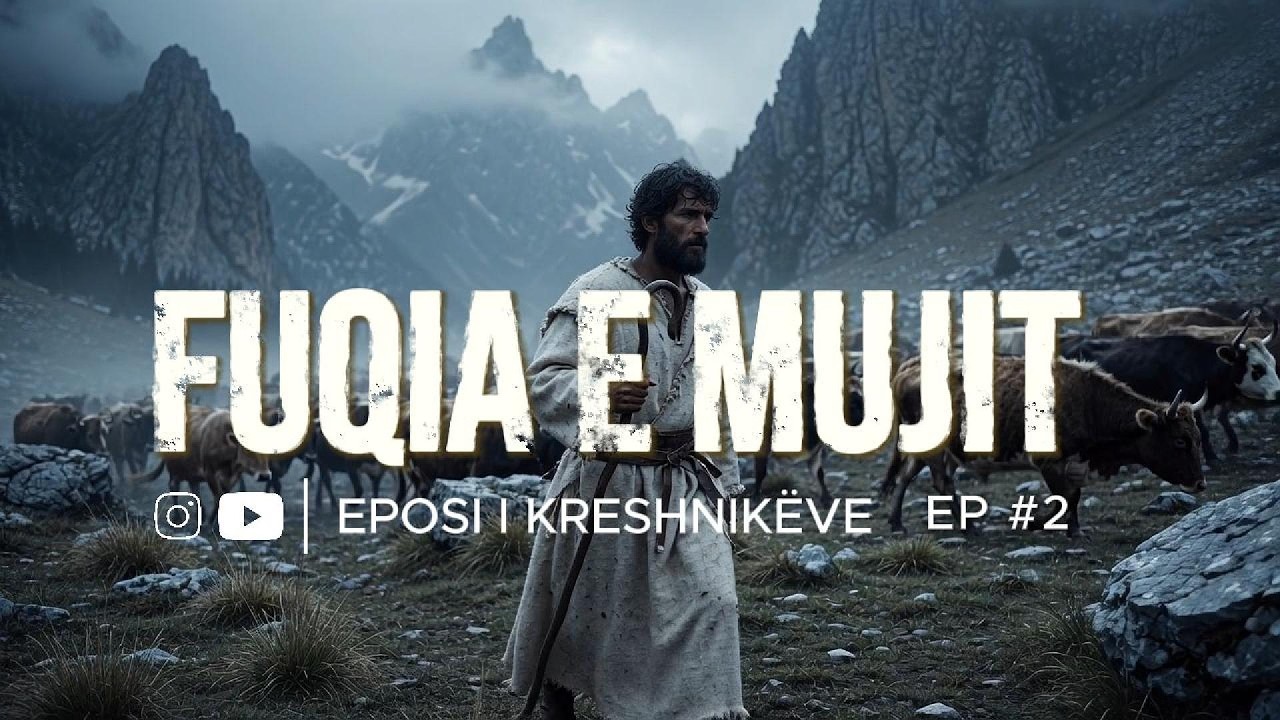
Muji is not born a warrior. At first he is an ordinary shepherd tending flocks in the mountains. The turn comes when he meets the zana — the female beings of the highlands who, in Albanian folk belief, dwell by springs and summits.
According to the songs, Muji guards the cradles of their children, and in gratitude the zana let him choose his reward. He chooses strength. From that moment he becomes a warrior above warriors, and the zana remain his sworn sisters, coming to his aid whenever he is hard pressed.
This episode marks the beginning of the age of heroes: the passage from the world of shepherds to the world of the frontier warriors.
In this episode

Episode 3
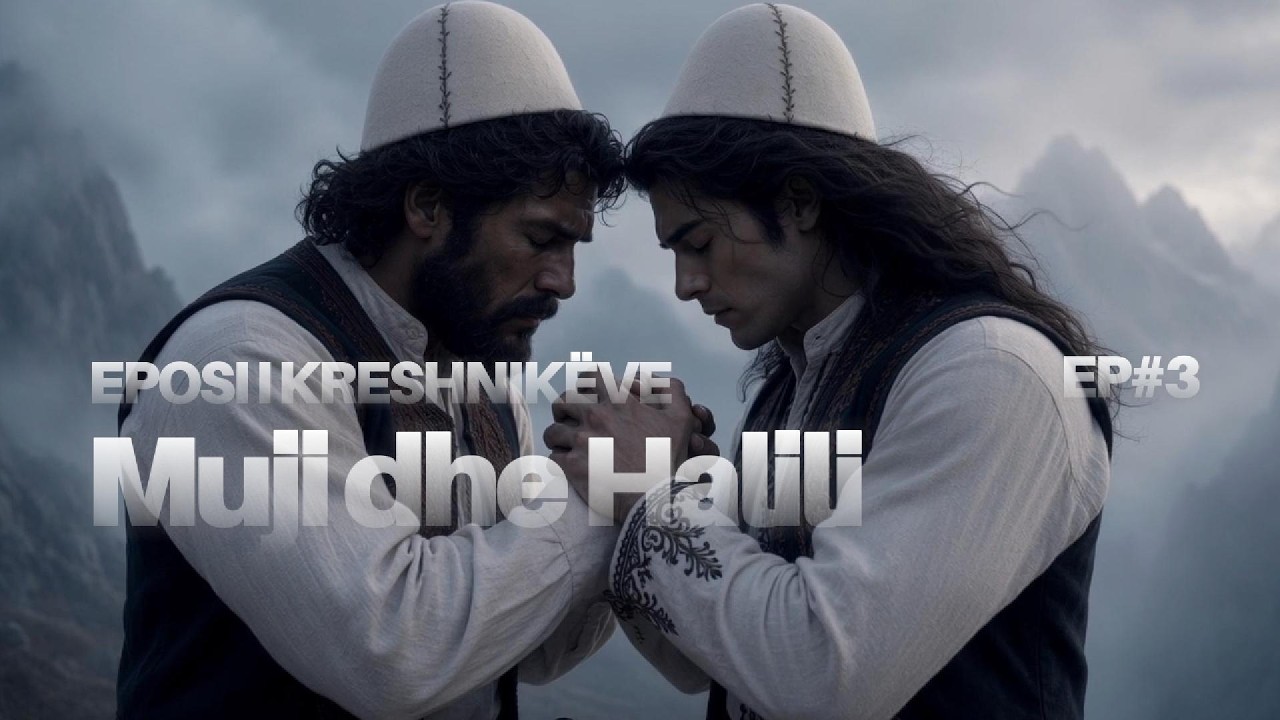
With Halili, the epic takes its full shape. The two brothers of Jutbina are opposites and inseparable: Muji heavy, strong and measured; Halili young, swift, handsome and unrestrained.
Their bond holds the whole cycle together: brotherhood, the sworn word, duty to the family and to the assembly of warriors. When one falls into danger, the other sets out without asking.
From this family core branch dozens of other songs of the epic.
In this episode
Episode 4
The warriors do not fight for conquest. The songs always show them as defenders: they guard the border, take back what was raided, answer when honour or land is touched.
Their most frequent opponents are the krajlë — foreign lords and kings beyond the border. The typical form is not mass battle but single combat between two champions: the fate of many rests on one encounter.
That structure turns war into a test of character rather than an exercise of force.
In this episode
Episode 5
A large part of the epic speaks not of war but of journey and marriage. The warrior sets out far away, into foreign land, to win a bride — and the road is full of obstacles, tricks and trials.
Love here works as a test of courage: winning the bride demands as much daring as single combat. The woman in these songs is rarely a silent figure; often she is the one who decides, who helps, or who uncovers the danger.
These songs soften the epic and give it another, more human side.
In this episode
Episode 6
The Bajloz always comes from the sea. He is foreign, gigantic, seemingly unbreakable, and he demands tribute: livestock, gold, or people.
In the language of the epic he is not merely an enemy — he is chaos itself, the evil that cannot be reasoned with. Against him, the hero stands as order stands against disorder.
Here the epic goes deep into the fantastic: scale beyond the human, extraordinary weapons, and duels that last for days.
In this episode
Episode 7
The epic preserves a layer of belief far older than the songs themselves. The zana of the mountains, the orë who accompany every person, the dragons who fight the kulshedra, the horses who speak and warn their masters.
These figures are not ornament. They describe a world in which the human being is not alone: the mountain, the water and the animal have wills of their own.
It is precisely this layer that makes the epic a witness to ancient Albanian belief, kept inside the song when it had nowhere else to survive.
In this episode
Episode 8
The events unfold in Jutbina and Klladusha — places that in the songs are the centre of the warriors' world. Around them lies a mixed geography: mountains, borders, the sea and the land of the foreign kings.
Where these places truly stood remains a debated question. The same figures — Muji and Halili — also appear in the oral epics of neighbouring peoples, and scholars still argue over the route of exchange and over origins.
This episode does not settle the debate; it shows it, because the debate too is part of the epic's history.
In this episode
Episode 9
The epic survived unwritten. It was carried by the rapsodë — folk singers who learned the songs by ear and rebuilt them at every performance, accompanied by the lahuta, a single-stringed instrument of wood and hide.
In 1937, two Franciscans, Bernardin Palaj and Donat Kurti, published in Tirana «Kângë kreshnikësh dhe legenda»: thirty-four songs of some eight thousand two hundred verses, gathered among the highlanders of the north.
In 2025, the art of playing, singing and crafting the lahuta was inscribed on UNESCO's list of intangible cultural heritage. Without the lahuta and the hands that held it, we would have nothing left to sing.
In this episode
Episode 10
The epic did not stay in the mountains. It entered literature and the way Albanians think of themselves. Gjergj Fishta built «Lahuta e Malcís» on the spirit and form of these songs, bringing back into it the zana and the orë of the oral tradition.
The question of this episode is a present one: what do Muji, Halili and Gjergj Elez Alia still say to us? Perhaps that strength without reason is worth nothing, that a given word weighs as much as a life, and that the true hero rises only when someone else must be defended.
This project is an attempt to give them back their voice.
In this episode
Before Jutbina echoed with the deeds of Muji and Halili, popular memory kept the story of a solitary hero. He was Gjergj Elez Alia. His fight against the Bajloz would become the model of courage later embodied by the great warriors of the epic.
Bernardin Palaj & Donat Kurti — Tirana, 1937. «Visaret e Kombit», volume II.
Intangible cultural heritage of humanity, inscribed in 2025.
Rome edition, 1958. The masterwork built on the spirit of the oral epic.
 41:16
41:16
 3:19
6:10
6:14
3:19
6:10
6:14